The Trip
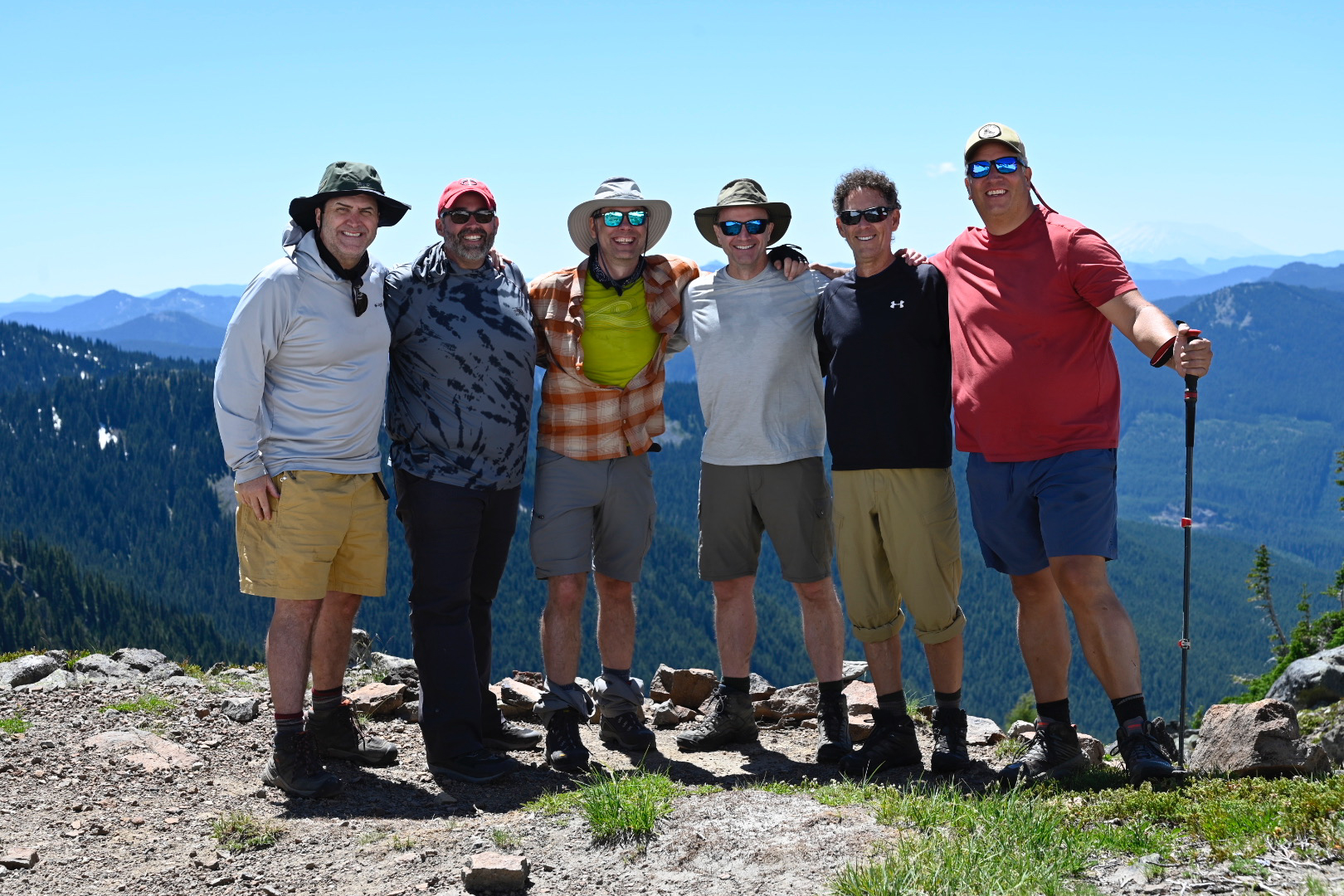
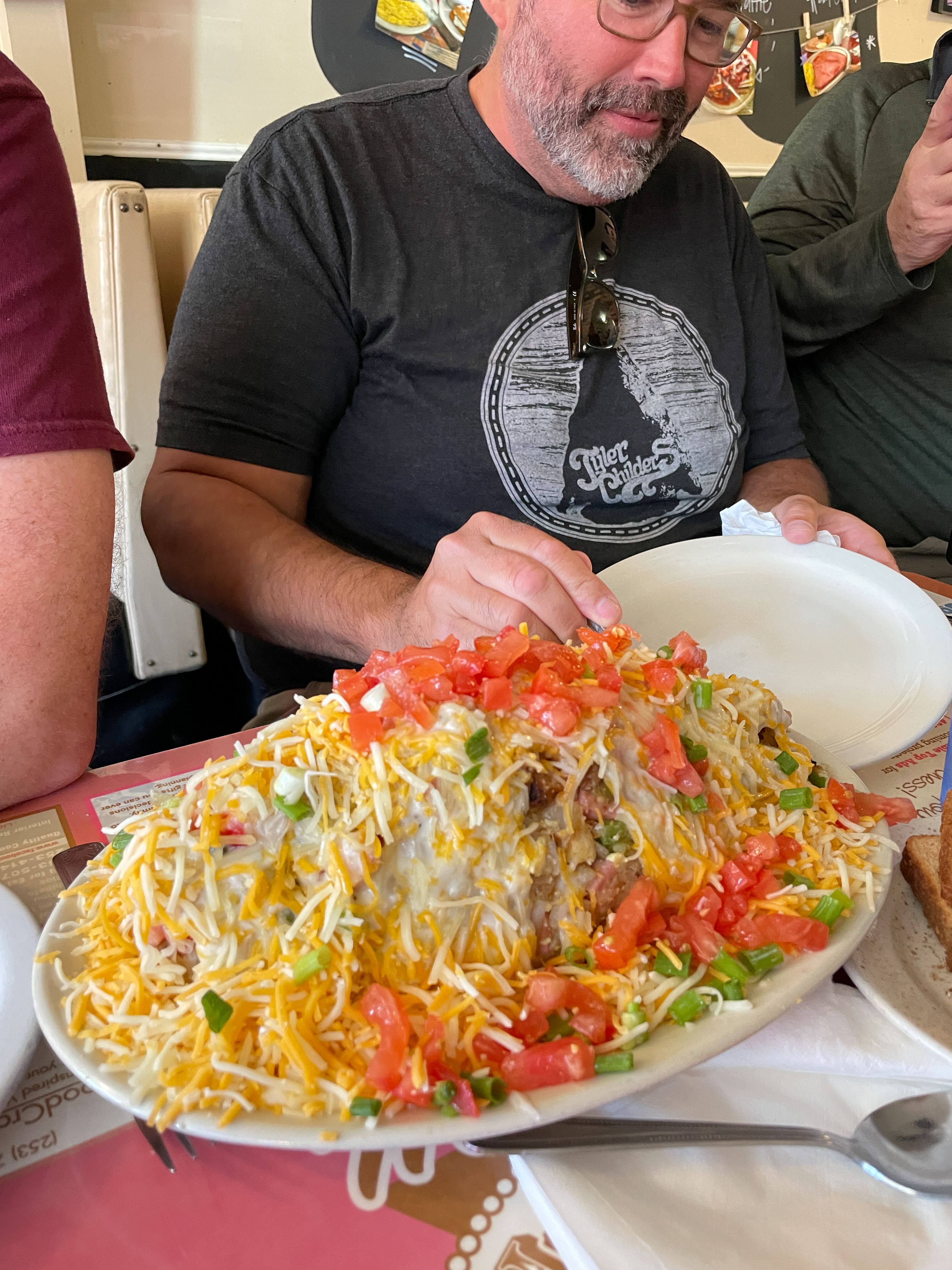
Not every trip requires a tent. This one was built around a comfortable Airbnb in Packwood and a plan to run day hikes into some of the least-visited wilderness in Washington. Six of us flew into Seattle on a Thursday in July 2022, arriving early enough to get south before the city had a chance to hold us up. We pulled off for breakfast in Tacoma at Marcia's Silver Spoon Cafe. The name suggests atmosphere. What it actually is is a no-nonsense greasy spoon with a focused menu and a complete absence of pretense — unapologetic, breakfast-forward, and very good at what it does. Two members of the group split what may have been the largest breakfast burrito ever assembled in the state of Washington. They made a dent. The burrito was not concerned.
Properly fueled, we headed straight for the High Rock Lookout. It's a short hike by any measure — 3.2 miles round trip — but the trail climbs steeply and the July heat wasn't doing anyone favors. You earn the top with your legs and then you're standing at the fire lookout and Rainier is just there, filling the entire northern horizon. Not framed by it, not visible through a gap — filling it. One of those views where the scale of the thing doesn't arrive in the photograph, only in person. The effort is well worth it.
We picked up groceries and beer in town and settled into the Airbnb, which had room for all six and a hot tub that would earn its keep by the following evening. The plan for the trip was day hikes. No permits, no bear canisters, no elaborate camp kitchen logistics. Sometimes the right approach to wilderness is a warm bed waiting at the other end of it, and there is no shame in building a trip around that.
The Goat Rocks Wilderness sits on the eroded remnants of an ancient stratovolcano straddling the Cascade Crest between Rainier and Adams. At 105,000 acres it's one of the larger designated wilderness areas in Washington, and somehow one of the least-visited — overshadowed at either end by two of the most iconic volcanoes in the range. What that geography delivers, for anyone willing to look past the bigger names, is a rugged ridgeline of volcanic summits, deep glacially carved cirques, and subalpine meadows that rank among the finest in the state, without the crowds you'd find twenty miles north. The Snowgrass Flats and Goat Lake loop had been on my list for a while. July 2022 was finally the chance to get after it.
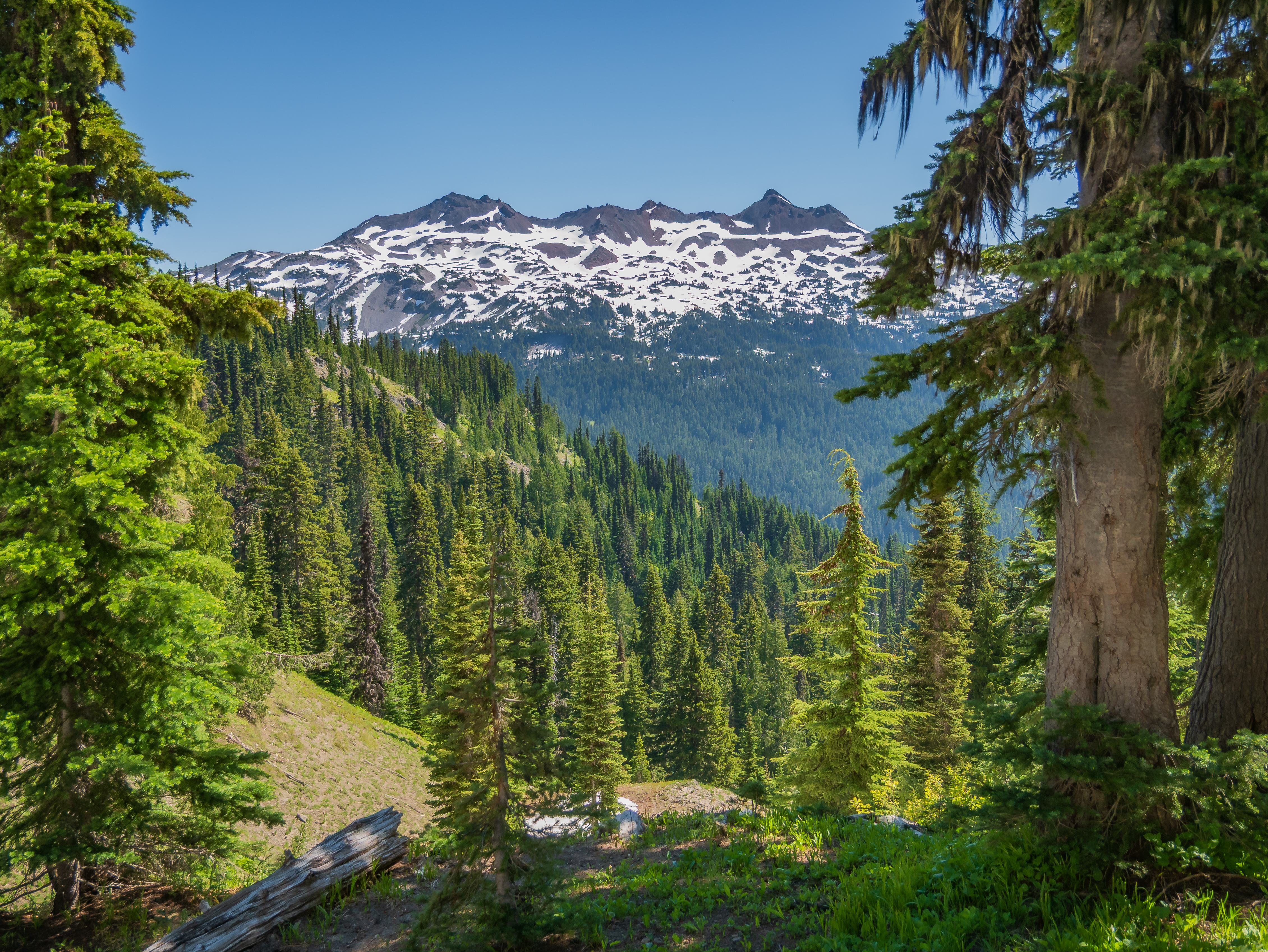
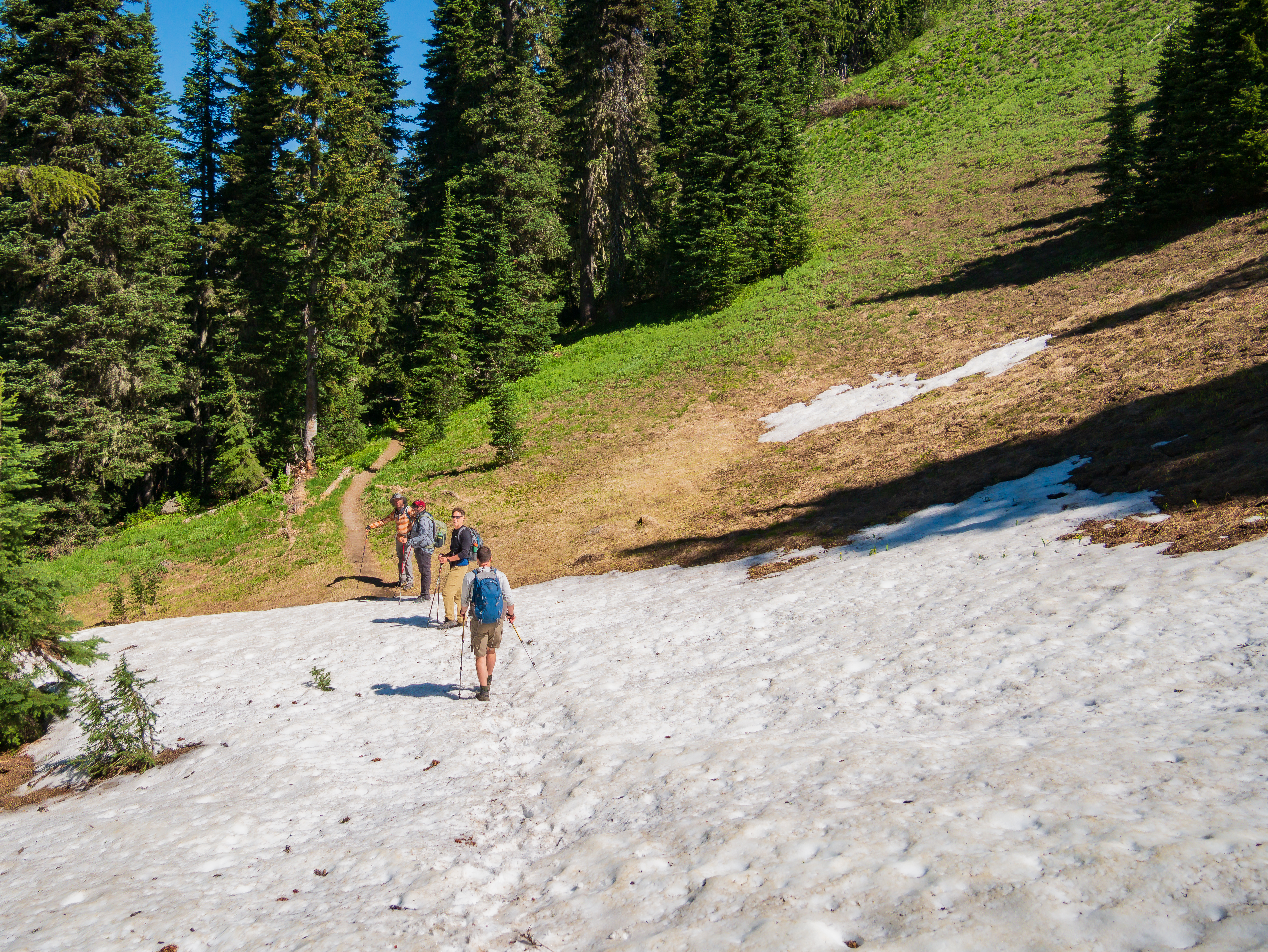
We had a leisurely start and were at the trailhead around 9 a.m., with almost the whole place to ourselves. The trail begins in thick old-growth forest — the kind that holds the humidity close and concentrates every mosquito in the South Cascades into a single, enthusiastic cloud. There is no graceful way to describe the mosquito situation in the Goat Rocks in early July: it is aggressive. Come prepared, or come prepared to be reminded that you weren't. The trail climbs at an easy, steady grade through the trees, and as the canopy opened, Mount Adams began to appear to the south — a wide, white shoulder against the blue, announcing that you're well into the volcanic Cascades now. We hit the first snow patches not long after, crested to the west side of the ridge, and the terrain opened up into something else entirely: a broad view that took in Adams to the south, Rainier to the north, and, just barely, the flat-topped profile of Mount St. Helens to the west. Three volcanoes from one ridgeline. Worth the mosquitoes.
“Post-holing is the technical term. The less technical description is: punching through the snow crust with every step while the person behind you watches and is glad it’s your turn.”
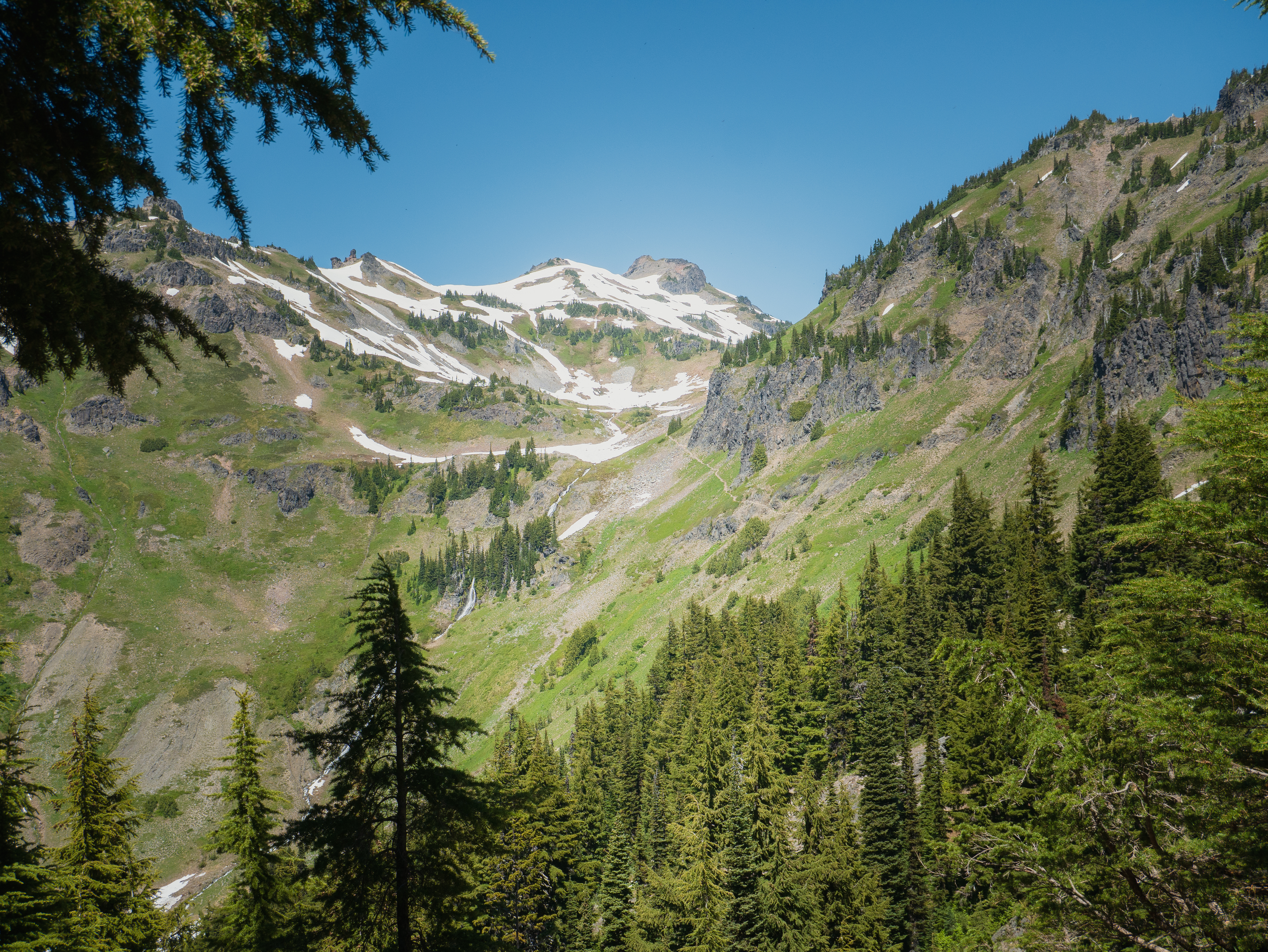
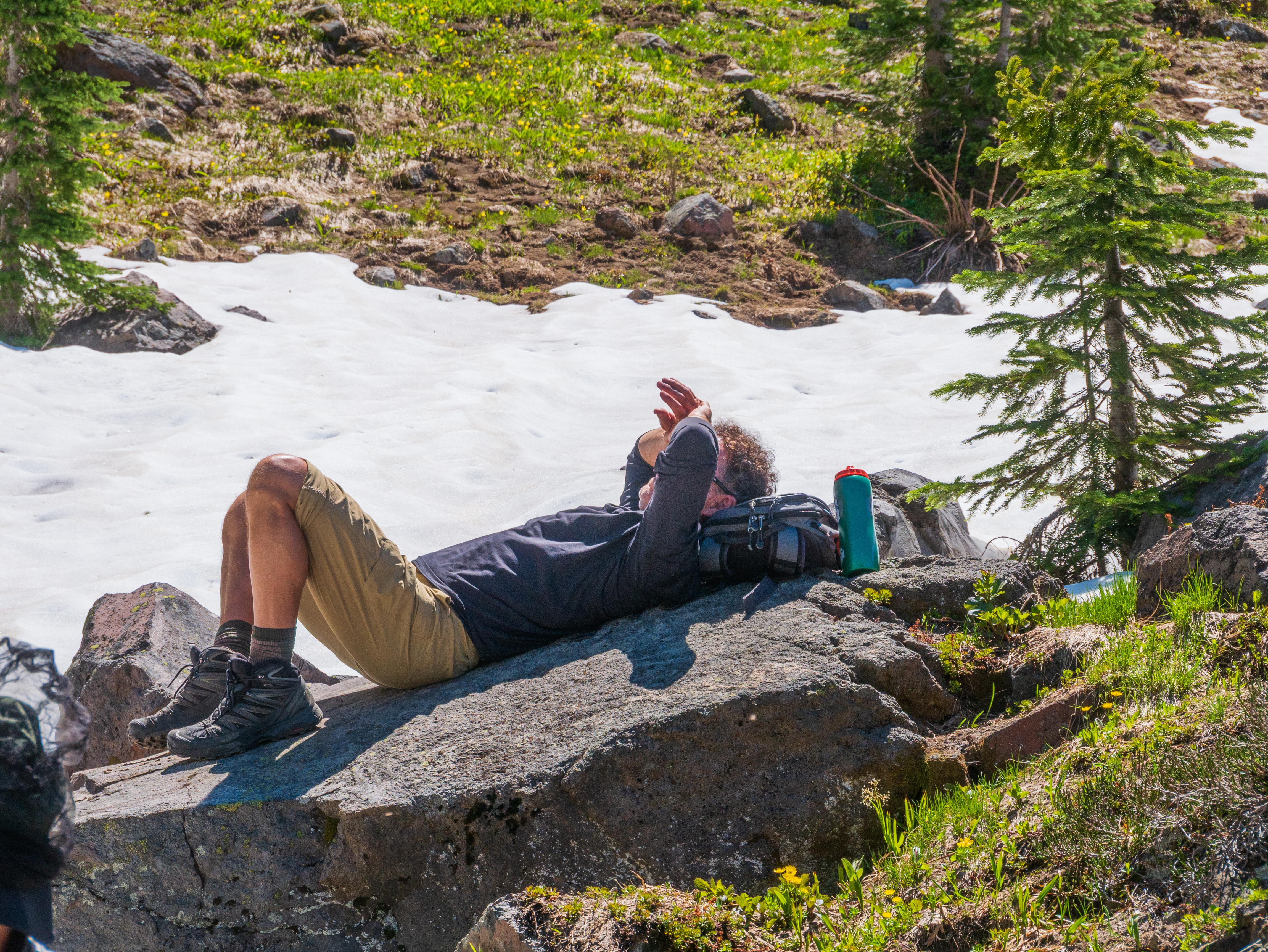
The snow deepened quickly above the ridge. Post-holing through heavy July snowpack has a way of wearing on the group by mile three — the first few minutes are novel, the next hour is a negotiation with your patience. Above the treeline the sun had done better work clearing the slope, and the going eased. We stopped in a broad subalpine meadow about a quarter mile short of Goat Lake — a snowfield, some rocks, a good rest. Three of us pushed ahead to the ridge for a look at the lake and the valley on the far side.
Goat Lake was frozen solid. This is not unusual — the lake holds ice well into summer, and 2022 was a heavy snow year. A massive wind-loaded cornice ran the full length of the ridge above it, and beyond the cornice, the trail that was supposed to complete our loop was buried under a season's worth of accumulation that showed no sign of reconsidering. The decision to turn around took about forty-five seconds.
Out-and-back.
On the way down I slipped on a snow patch and put together a mild knee sprain — the kind where you feel the wrongness before the pain catches up. I packed a nylon stuff sack with snow from the slope and wrapped the knee. We covered the five miles back to the trailhead at a measured pace, arrived in reasonable shape, and collectively agreed that the hot tub had never been better justified. Cold beers appeared. Pizza was ordered and consumed with the specific enthusiasm that a long day on snow tends to generate.
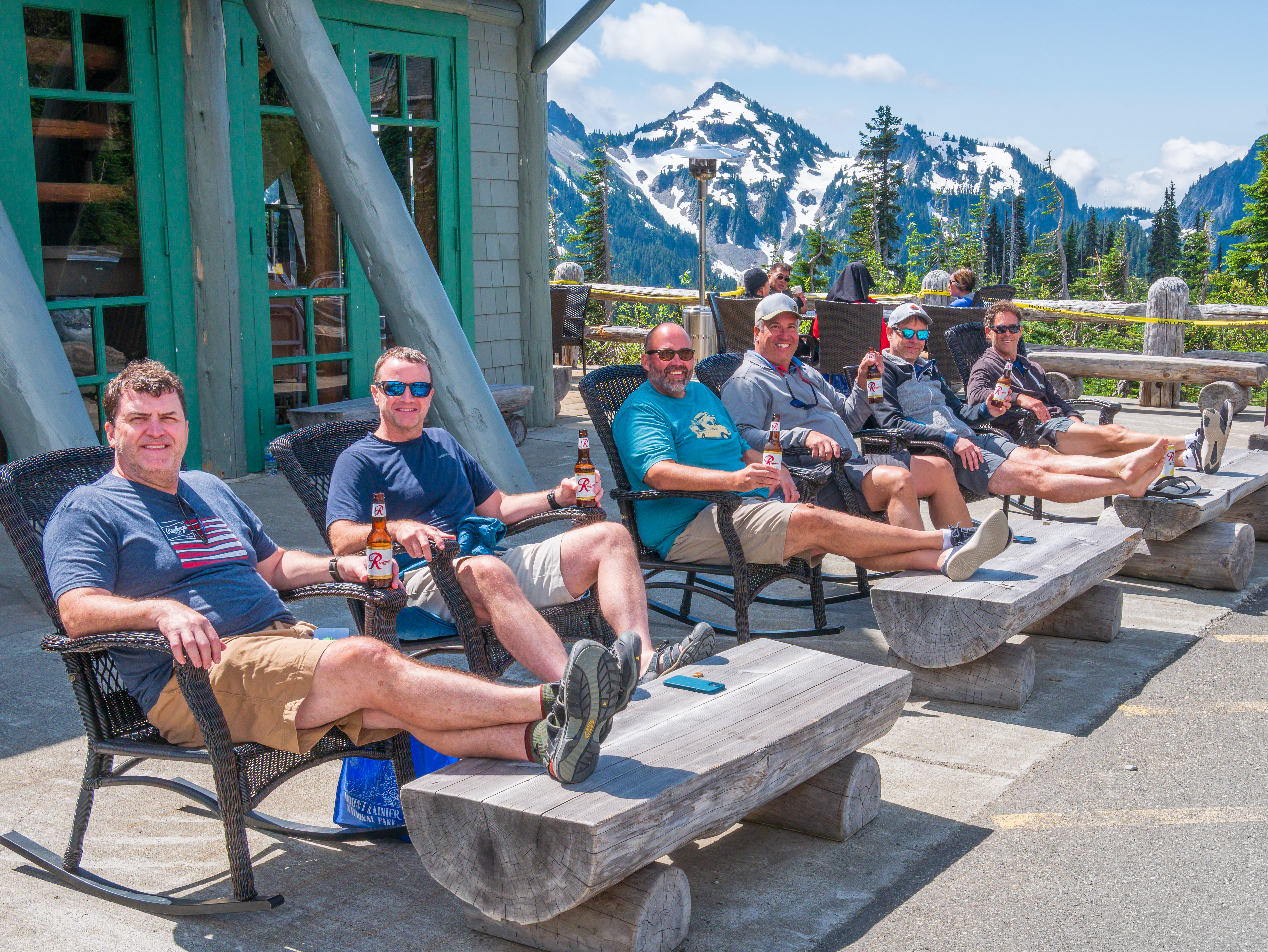
The third hike never happened. Six tired people and a mildly compromised knee are a reasonable argument against another full day on trail, and sometimes the trail gets to make the call. So we went sightseeing instead — up the mountain highway to Paradise Lodge on the south flank of Rainier, stopping along the way because Rainier at full July height is not something you drive past without pulling over. We finished the afternoon on the Paradise Lodge patio with Vitamin R. That's Rainier Beer, for the uninitiated. At 5,400 feet with the Tatoosh Range behind you and a long weekend in the books, it tastes better than the label suggests it has any right to.
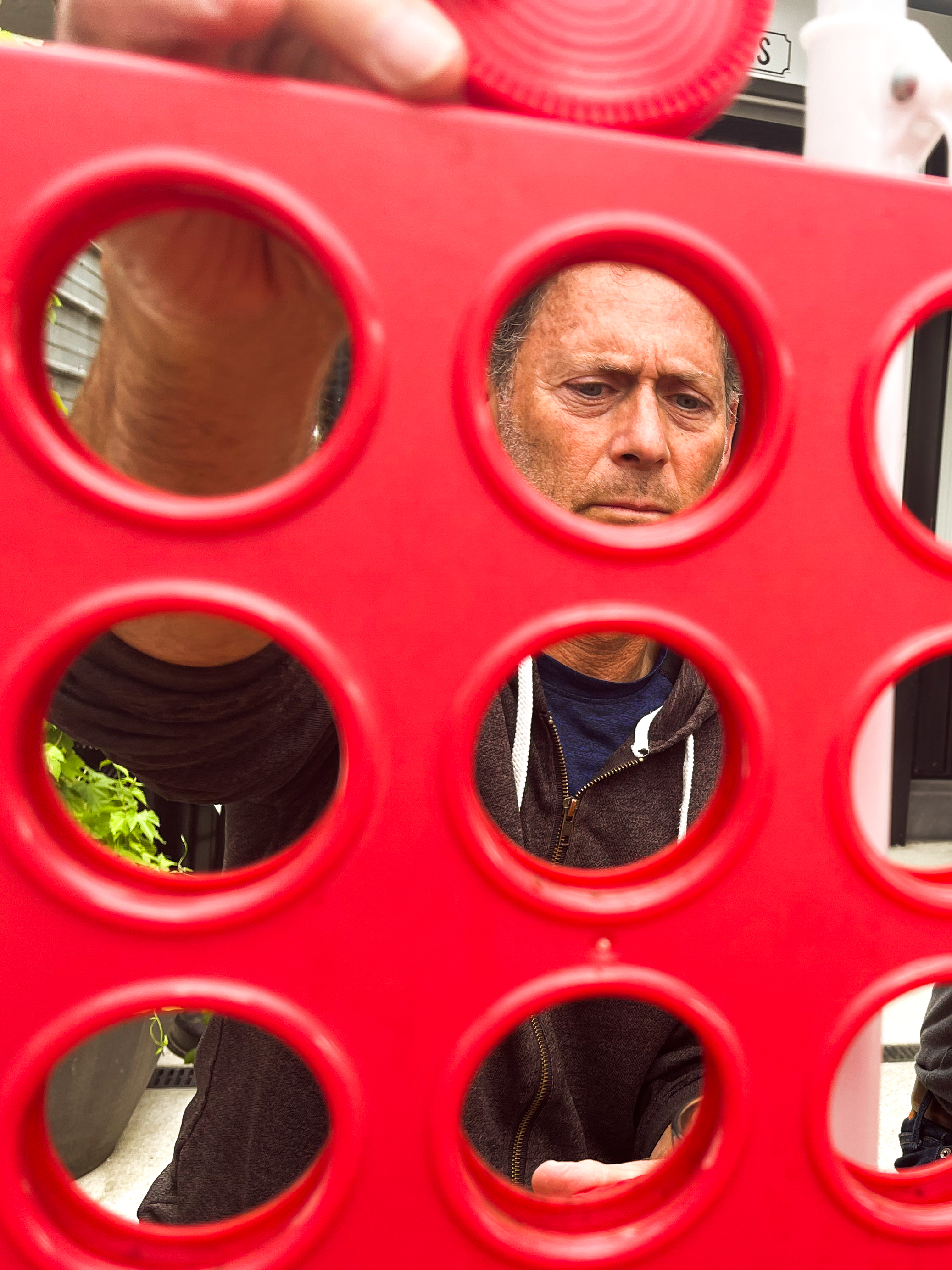
We wrapped the trip in Seattle with a proper night out. Rhein Haus in Capitol Hill for games and beers — enormous, loud, improbably fun. Then drinks at Canon, which has one of the most serious whiskey programs on the West Coast and a bar staff that knows exactly what to do with it. Dinner at Ba Bar for Vietnamese that earned every bit of the recommendation, and a nightcap at Zig Zag Cafe, a Pike Place institution that has been earning its reputation for years. The south Cascades delivered. Seattle delivered. The knee recovered.