The Trip
Washington. July 2016. A father-and-son trip to the Pacific Northwest that opened with a day in Seattle before pushing northeast into one of the least-visited national parks in the country. North Cascades doesn't always make the shortlist when people think about iconic American wilderness, but it should. The park holds more glaciers than any other range in the contiguous United States, and the peaks — jagged, vertical, laced with permanent snow well into summer — look less like anything else in the Lower 48 and more like something lifted from the Swiss Alps. It's a place that rewards the effort to find it. We found it, and it found a few things to teach us in return.
We started in Seattle, because that's the right way to start a PNW trip. REI's flagship store in Capitol Hill is worth a visit even when you don't need anything — we, of course, needed things, and left with last-minute provisions and the usual pre-trip optimism that a new gear purchase tends to inspire. The 90 minute drive from Seattle into the North Cascades corridor follows the Skagit River through progressively more dramatic terrain, ending at Marblemount, which is less a town than a suggestion of one: a gas station, a few buildings, and mountains in every direction. We stayed the night at the North Cascades Inn on the river. Quiet, comfortable, exactly the right amount of rustic.
"Always have a plan. Always have a backup plan. And always — always — bring a second water filter."
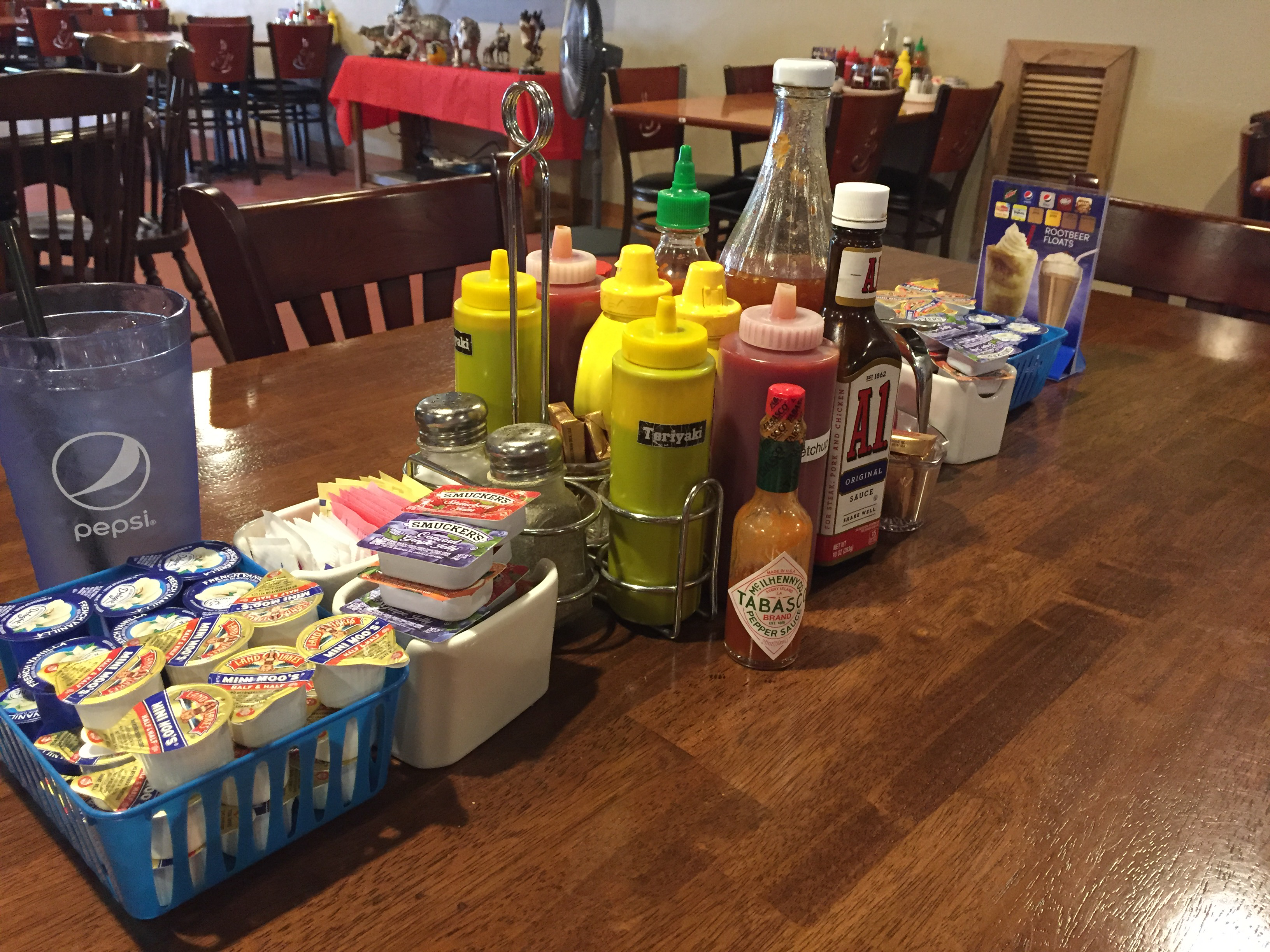
The next morning we stopped at the ranger station to pull our permits — Pelton Basin for night one, the Sahale Arm for night two, assuming all went to plan. Then breakfast at the Mondo Restaurant, which sounds like it belongs somewhere in lower Manhattan but is, in fact, a diner in Marblemount. The food was decent. The condiment situation, however, was baffling: every table covered in a dense arrangement of bottles, squeeze containers, and caddies of sauces running the full spectrum from Tabasco to teriyaki to A1 to Smucker's. We ate, collected our to-go sandwiches for lunch on the trail, and left more confused about breakfast than we arrived.
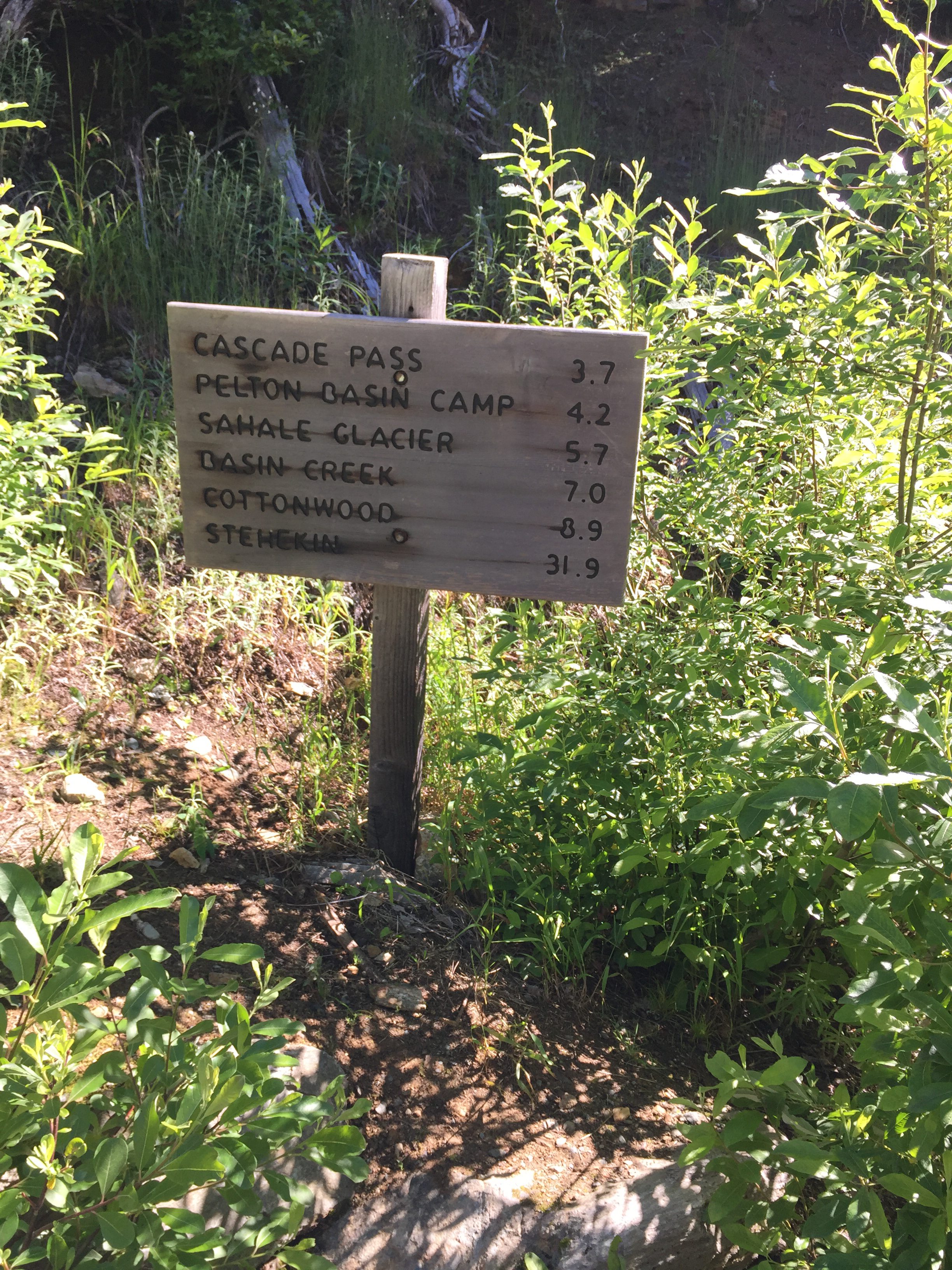
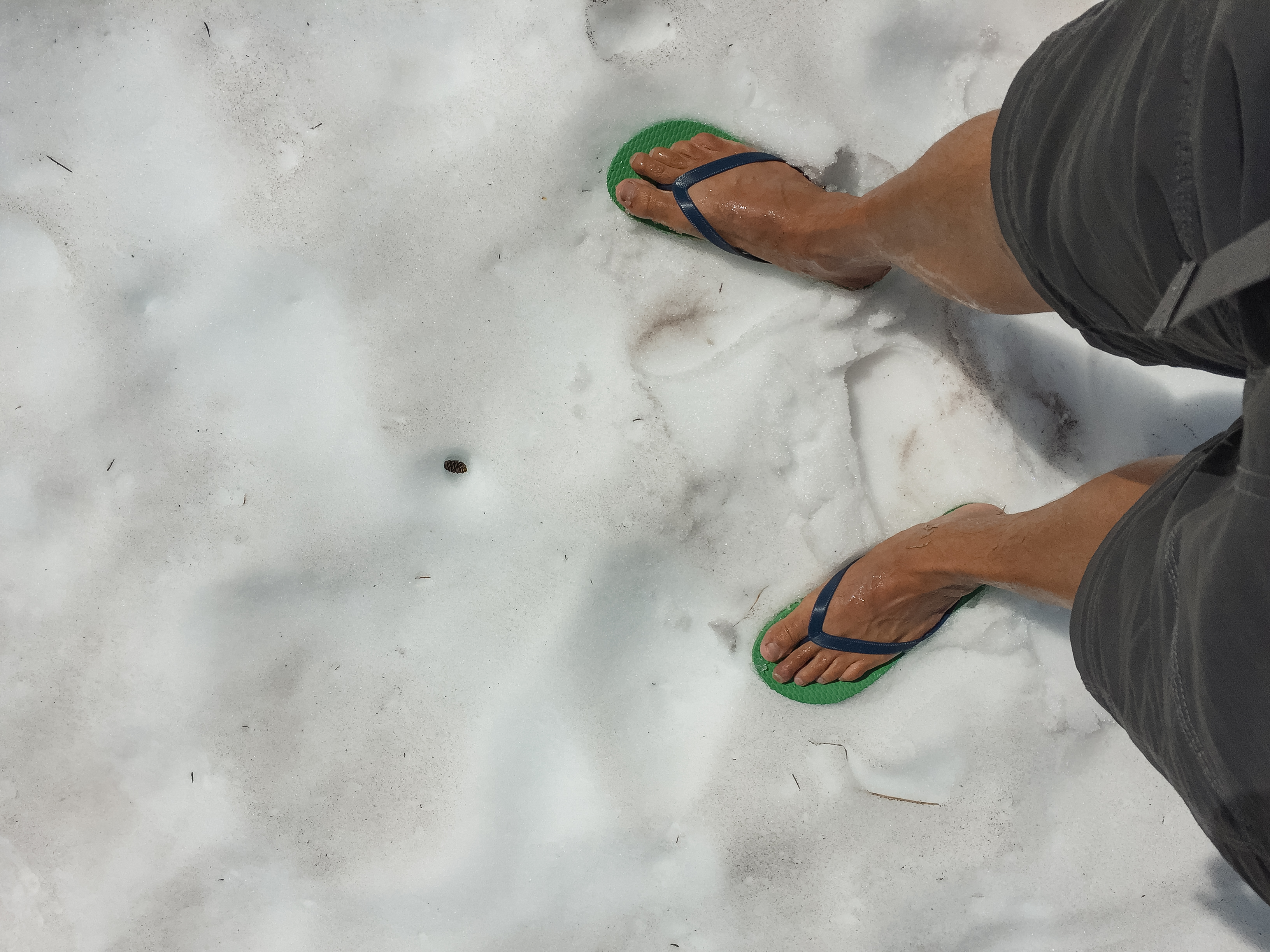
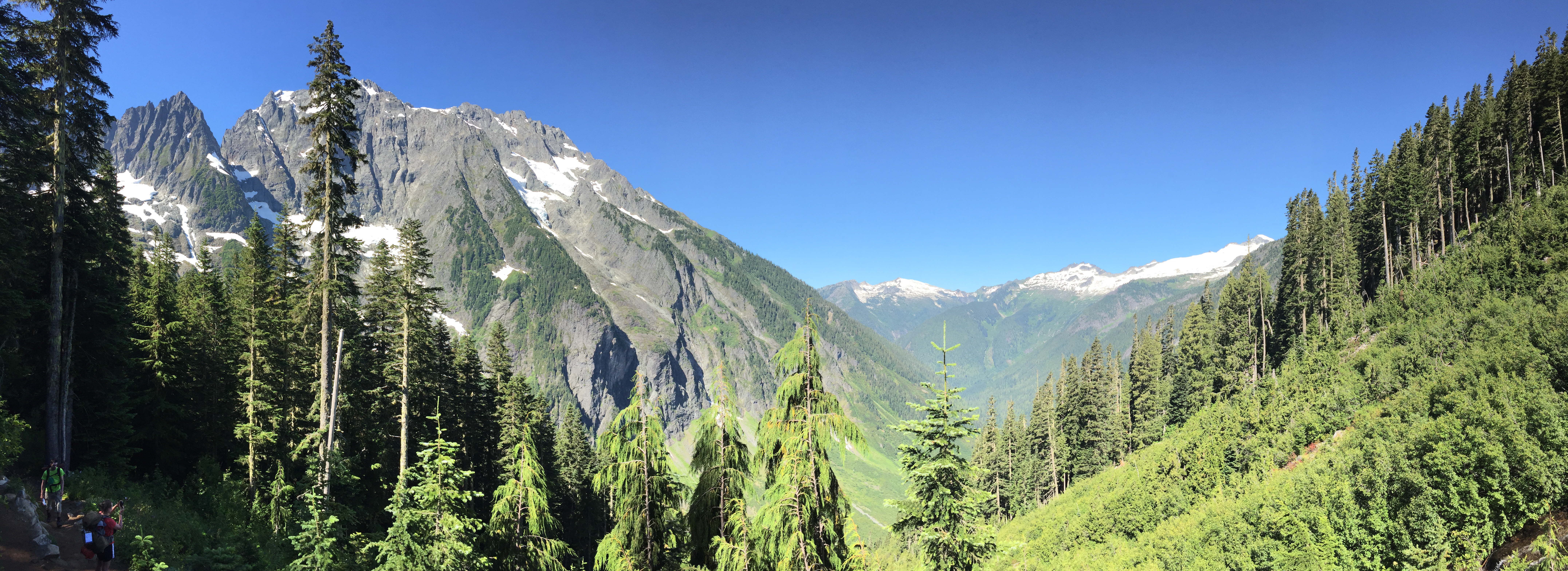
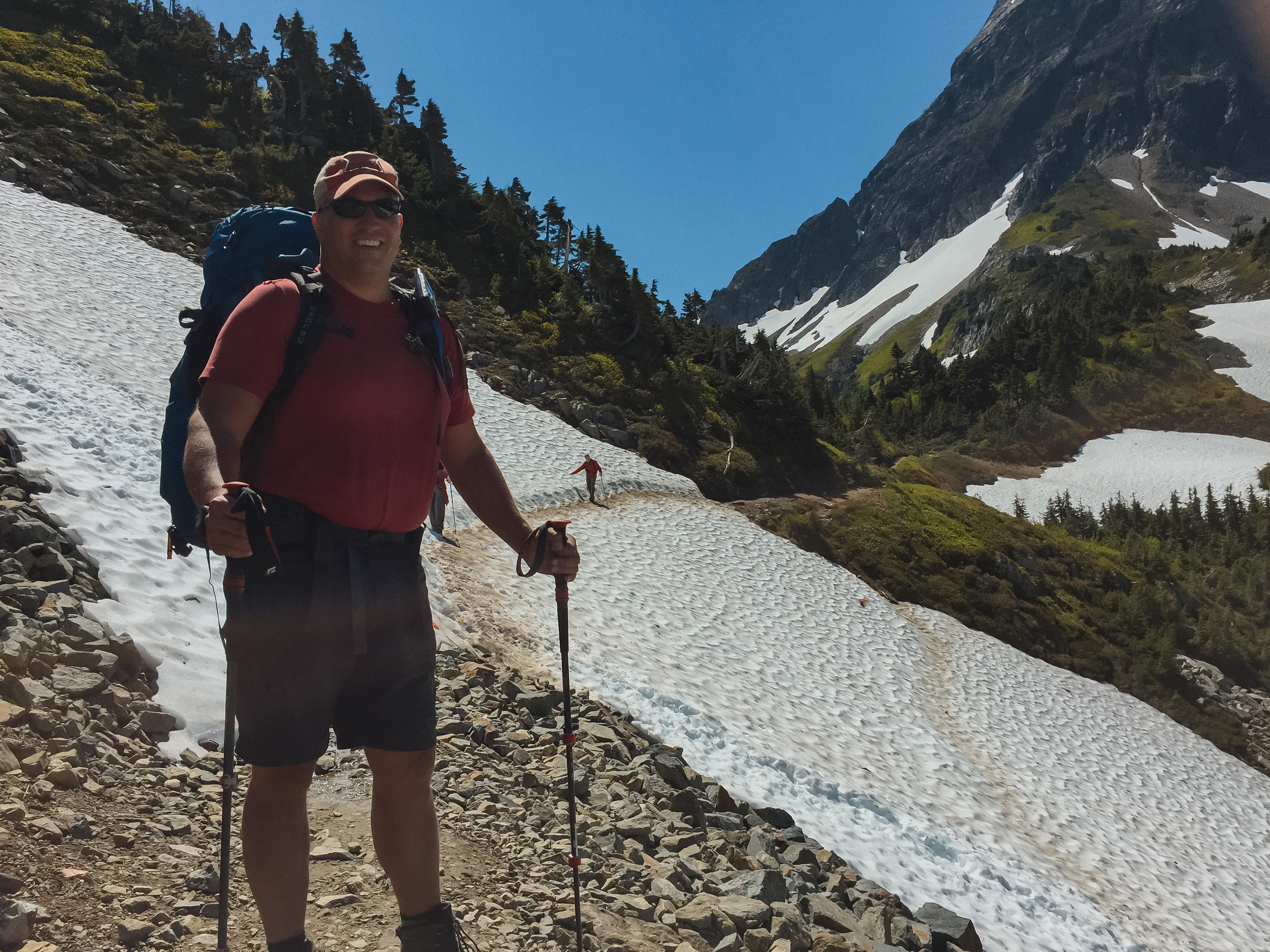
The Cascade Pass Trailhead sits at the end of a bumpy forest service road — about thirty minutes of washboard that recalibrates your expectations for what "road" means. When you finally step out and shoulder your pack, the trail gets to business immediately. It climbs through several dozen switchbacks, the forest thinning as you gain elevation, the peaks growing closer and more imposing with every turn. There's nothing subtle about the North Cascades: the walls are tall, jagged, and close, and the snowfields don't let go even in July. We crossed a sketchy snowfield on the final approach to the pass, punching through crust with each step, before emerging into one of the better views in the American West. The Pelton Basin spread below. The Sahale Arm rose steeply to the north. To the south, the Ptarmigan Traverse — a legendary technical mountaineering route — headed off into the range for the truly enterprising. The trail sign at the bottom had noted Stehekin at 31.9 miles; follow this corridor far enough east and you eventually reach Lake Chelan and a ferry that brings you back to civilization. We were not those people — not on this trip.
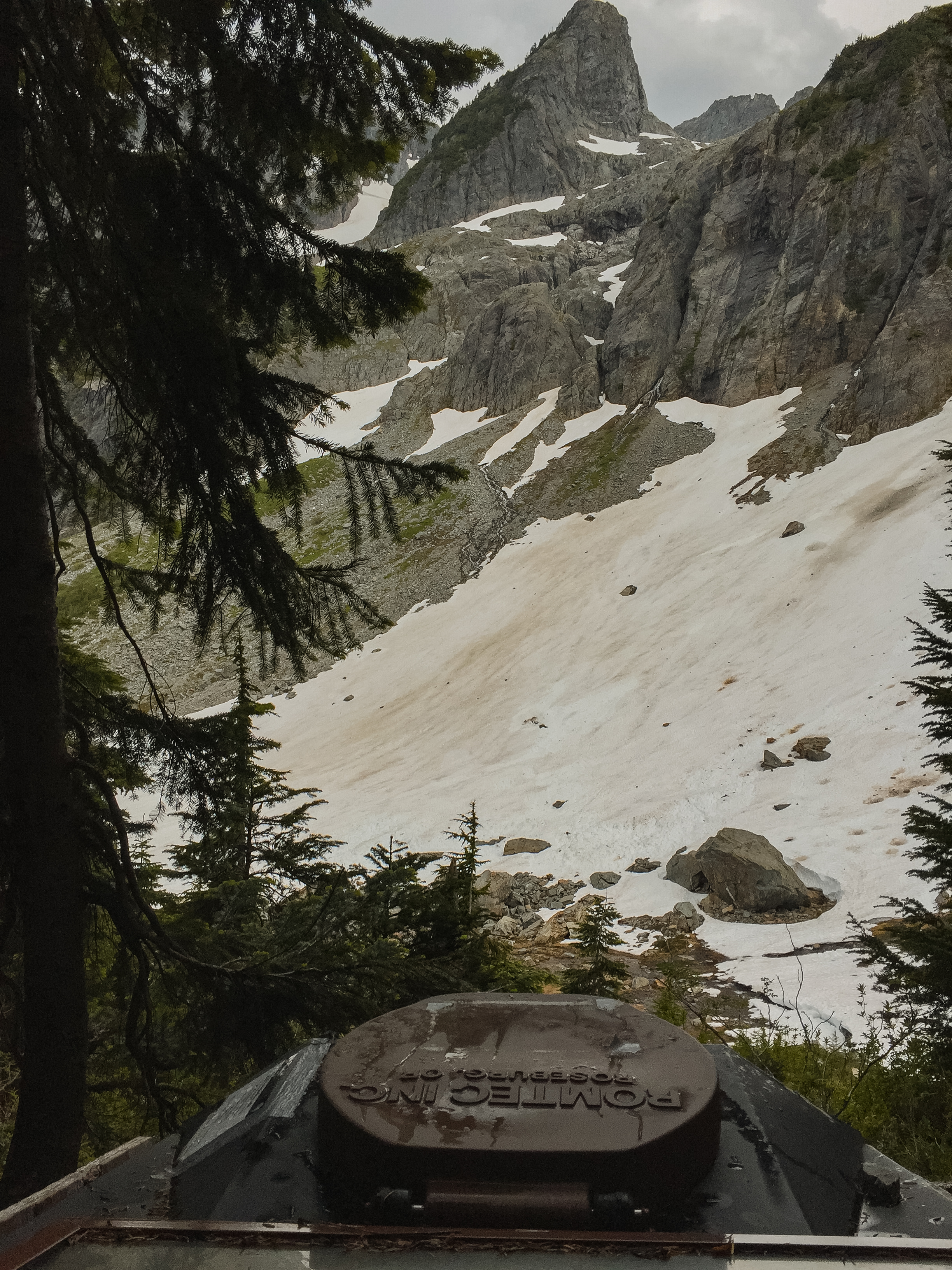
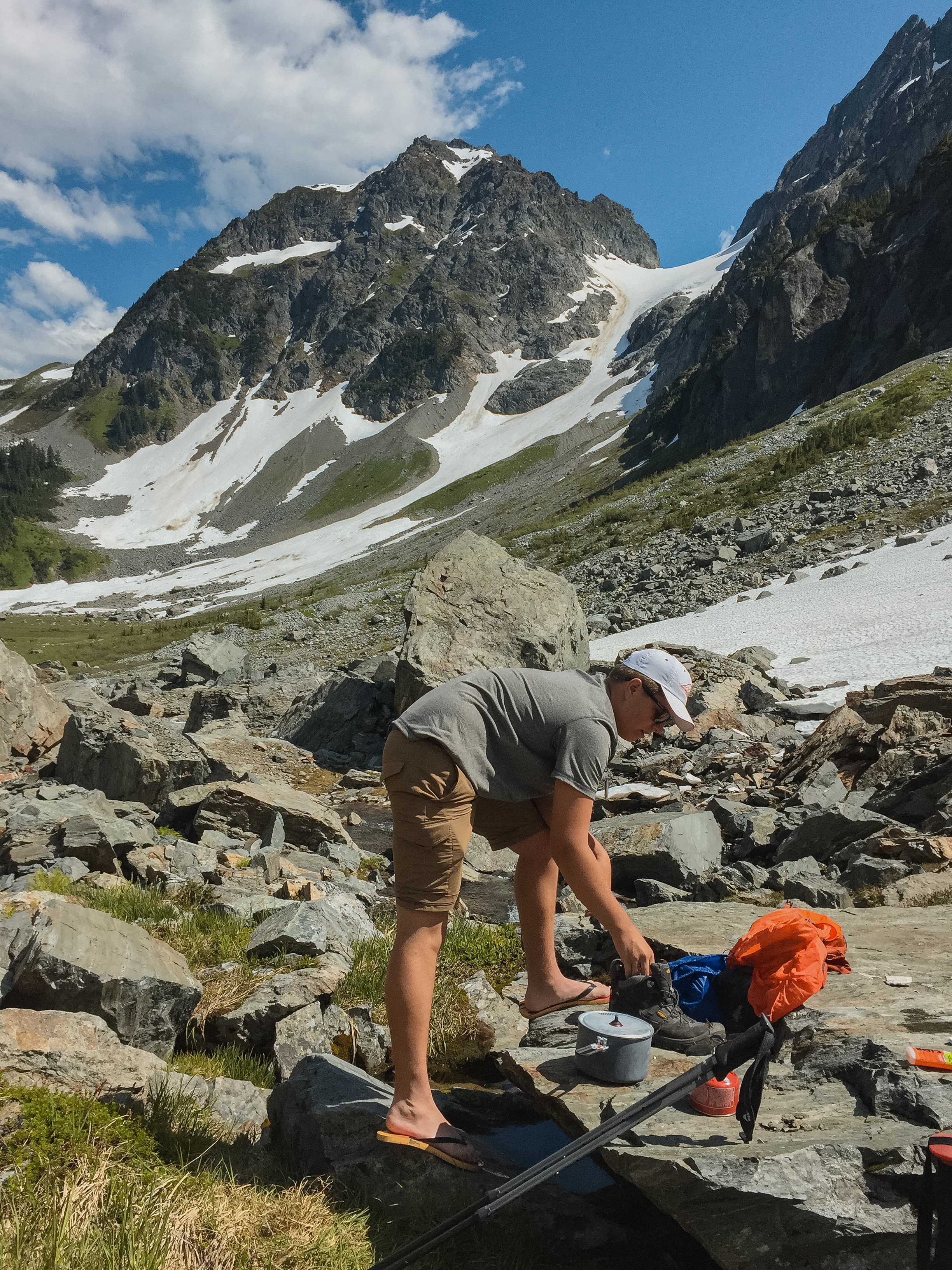
We stopped at the pass to eat our sandwiches and let the view do its work. It's the kind of spot where you sit down for five minutes and forty-five pass without noticing. Eventually we descended to the Pelton Basin campsite, set up the tents, and discovered the first problem of the trip: the water filter was clogged, producing barely a trickle. We switched to boiling, which works fine but takes considerably longer than you'd like when you're thirsty and the cook pot is the only vessel you have. We got the water situation sorted well enough. But the backup plan was now very much on the table.
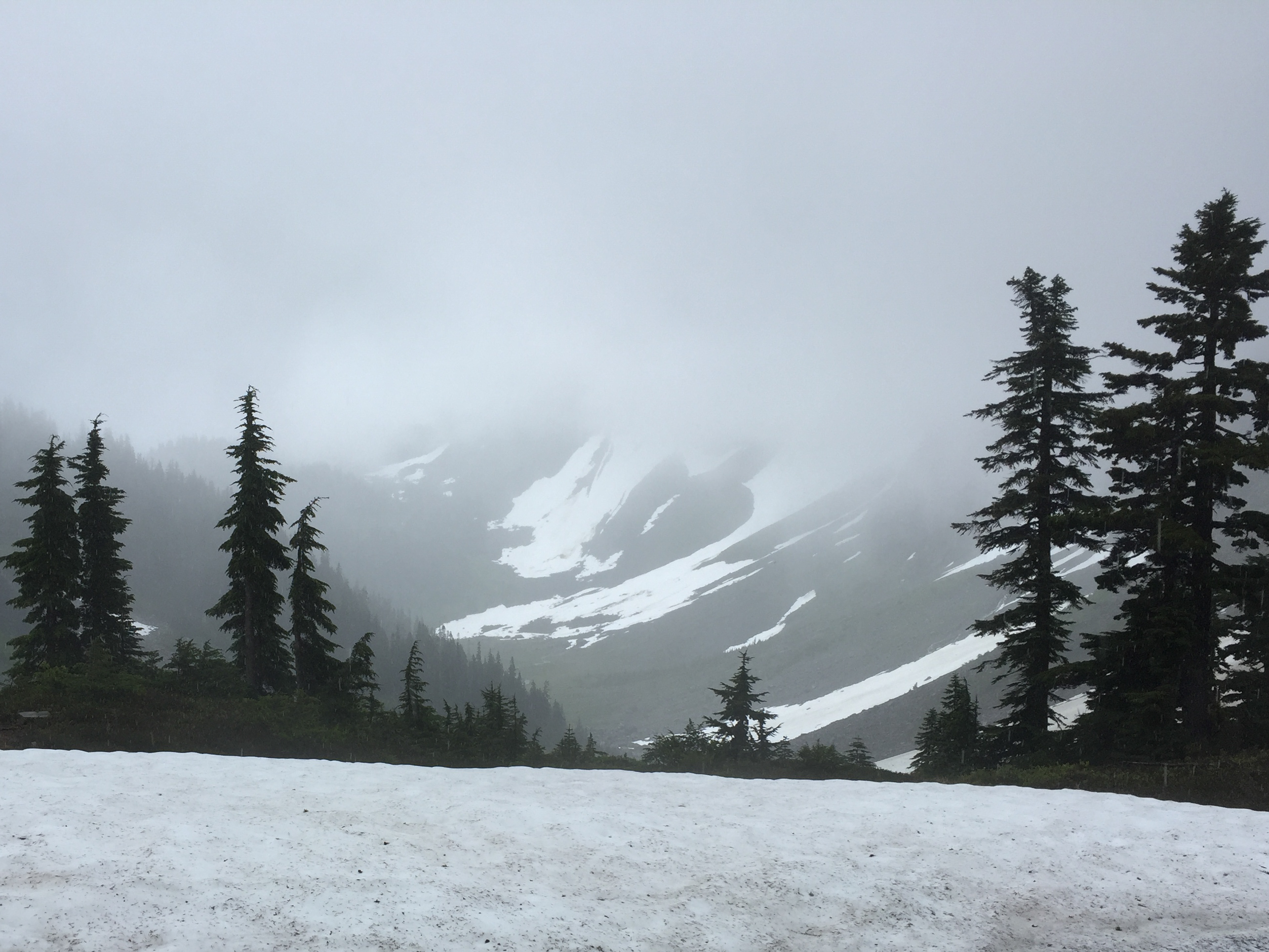
That evening, the clouds that had been building all afternoon finally committed. Rain moved in and stayed. It's the Pacific Northwest — the mountains make their own weather and they don't consult your itinerary in the process. Between a clogged filter and a wet camp, the case for pressing up to the Sahale Arm in the morning dissolved pretty quickly. We made the call to hike out after a breakfast of instant oatmeal and some hot cocoa. It was the right call — one of those decisions that feels like a concession in the moment and makes complete sense by the time you're warm and dry. The descent was fast, the mood was good, and at the trailhead we collected a bonus we hadn't expected: a black bear moving through the brush at the edge of the parking area. She was small and timid and vanished into the trees almost before we could register what we were looking at. A fine ending to two days in the park.
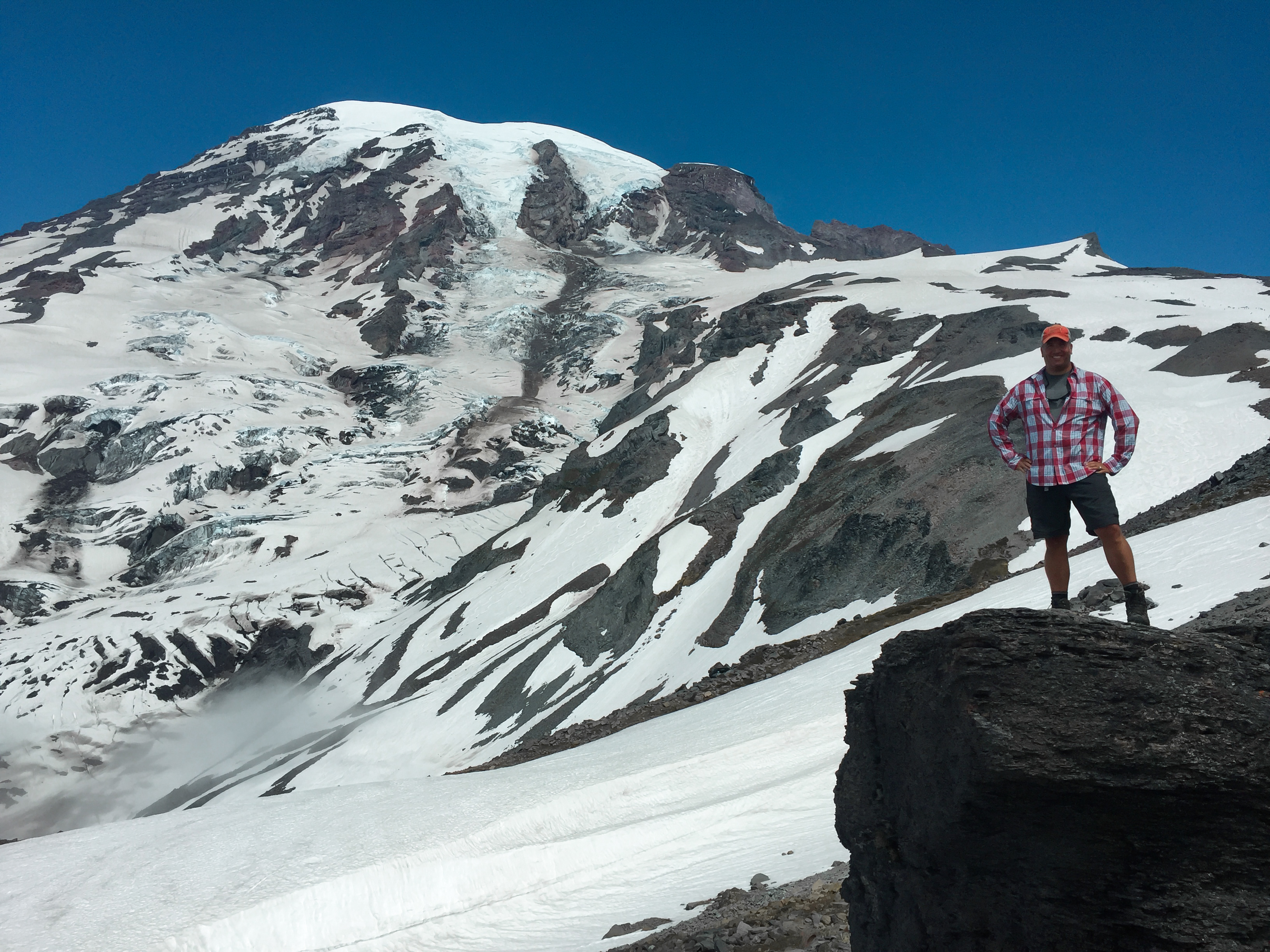
We drove south to Tacoma, which turned out to be a genuine surprise — a real city with a relaxed waterfront, better food than its reputation suggests, and a pizza spot that earned its place in the trip report. More importantly, that afternoon the clouds broke and delivered a clear view of Rainier rising to the east that settled the question of what came next. We spread our wet gear across every surface of the hotel room to dry overnight. Morning brought blue sky, and we drove up to Paradise at Mount Rainier National Park.
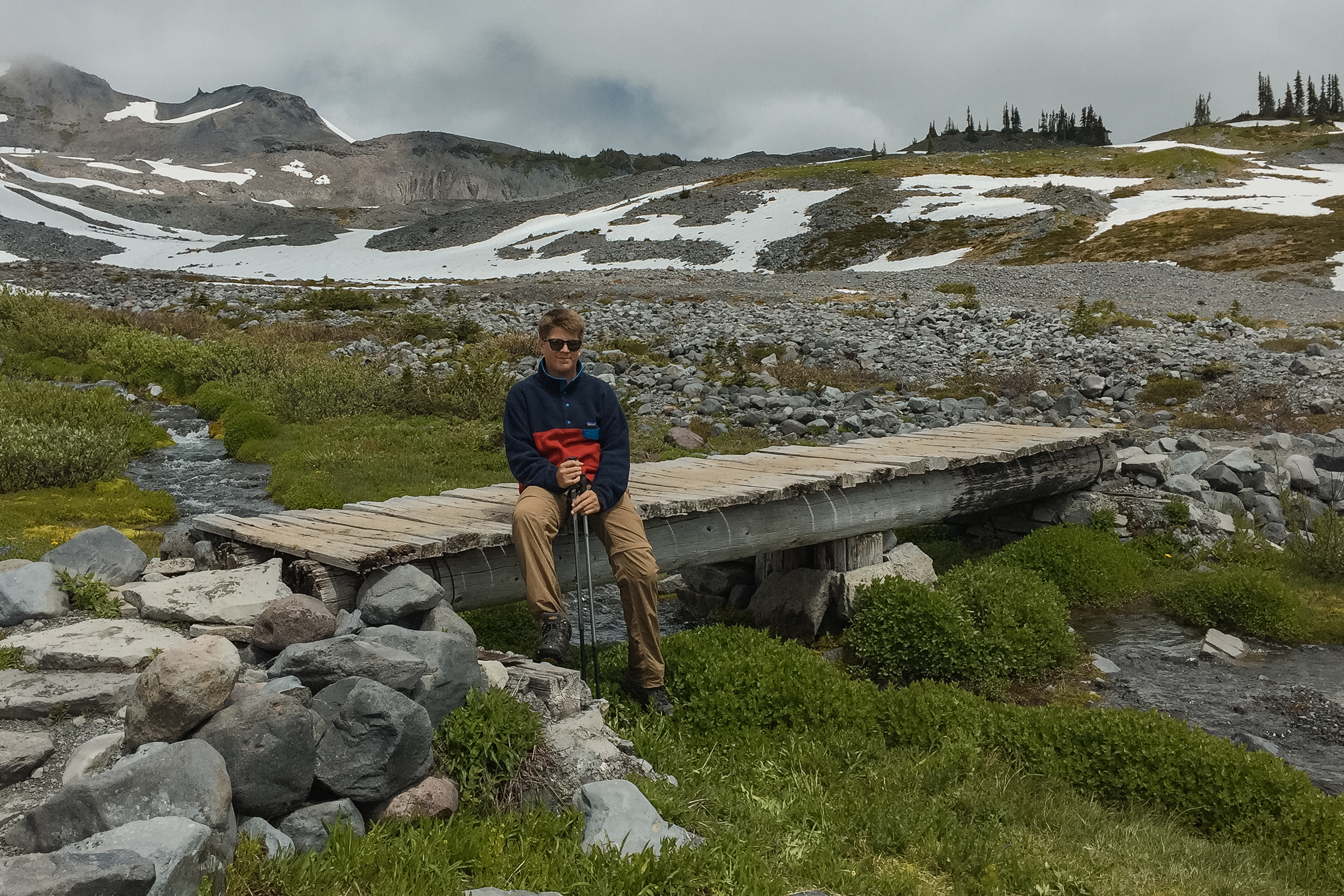
Seven miles on Rainier is a different experience than seven miles almost anywhere else. The mountain is enormous in a way that photographs don't fully prepare you for, and the trail at Paradise moves through terrain that shifts its character every hour — wildflower meadows, snowfields, rocky ridgelines, alpine streams, and back again. Clouds came and went throughout the day, alternately obscuring and clearing the summit in waves, which made every opening feel earned. We hit all four seasons in a single afternoon. That is not an exaggeration. We left tired and satisfied in the way that only a day on a big mountain delivers.
The Cascade Pass trip didn't go to plan. The gear failed. The weather rolled in. We never made the Sahale Arm - let's call that unfinished business. But we saw two national parks — one of the least-visited in the country and one of the most dramatic — had good meals in two cities, and came home with the kind of memories that tend to outlast the ones from trips that go exactly right. Sometimes the adjustments are the story. Always have a backup plan. And for the love of everything, always carry a second filter.